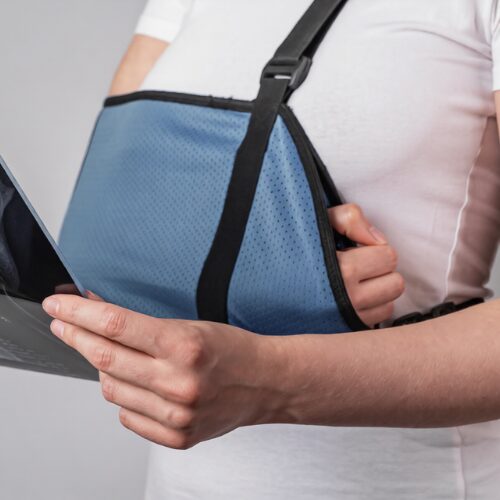
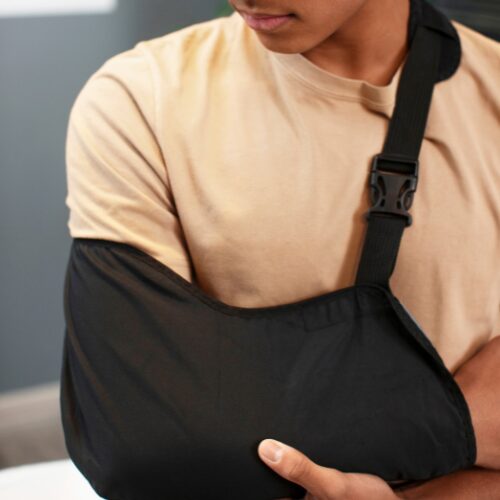
Shoulder injuries can significantly restrict arm movement and affect daily activities. A shoulder immobilizer is specifically designed to stabilize the shoulder joint, reduce excessive motion, and support healing after injury, surgery, or shoulder instability.
People searching for a shoulder immobilizer often want to know how it differs from a sling, whether it helps manage left shoulder pain causes, and when doctors actually recommend using one for recovery.
Unlike a basic arm sling that mainly supports the forearm, a shoulder immobilizer keeps the arm firmly secured against the body to prevent rotation and sudden movement. This guide explains the types of shoulder immobilizers, their uses and benefits, and when doctors recommend a shoulder immobilizer for safe healing and long-term shoulder stability.
A shoulder immobilizer is a structured orthopedic support brace designed to keep the arm securely positioned against the body, restrict shoulder movement, reduce joint strain, and promote proper healing after injury or surgery.
• Shoulder dislocation
• Rotator cuff injury
• Shoulder instability
• Post-surgical recovery
• Severe left shoulder pain
By stabilizing the joint and limiting unnecessary motion, a shoulder immobilizer protects injured ligaments, tendons, and muscles during the early healing phase.
Different types of shoulder immobilizers are available depending on the severity of injury and the level of support required. Choosing the right type depends on medical advice and recovery needs.
A standard shoulder immobilizer includes an arm pouch and supportive straps that wrap around
the torso.
• Provides firm joint stabilization
• Limits shoulder rotation
• Supports surgical recovery
• Keeps arm secured to body
A shoulder immobilizer belt provides additional torso compression and enhanced restriction compared to a regular sling.
• Offers stronger chest support
• Prevents accidental arm movement
• Enhances joint restriction
• Helps manage shoulder instability
A universal shoulder immobilizer is adjustable and suitable for either shoulder.
• Fits multiple body sizes
• Easy to wear and remove
• Suitable for mild injuries
• Provides balanced positioning
Selecting the correct shoulder immobilizer ensures effective stabilization and comfort during recovery.
Understanding left shoulder pain causes helps determine when immobilization is necessary and when rehabilitation may be more appropriate.
• Rotator cuff tear
• Frozen shoulder condition
• Muscle strain injury
• Shoulder instability episodes
• Tendon inflammation
In cases where movement increases pain or instability, doctors may recommend a shoulder immobilizer to reduce strain and allow proper tissue healing.
The uses of a shoulder immobilizer extend beyond simple support. It plays an important role in protecting the joint and preventing further injury.
• Stabilizing the joint after dislocation
• Supporting post-surgical healing
• Preventing excessive shoulder rotation
• Reducing swelling and inflammation
• Protecting healing ligaments
Doctors often prescribe a shoulder immobilizer before starting shoulder stretching exercises or strengthening programs.
Using a shoulder immobilizer correctly provides several therapeutic benefits during the acute injury phase.
Key benefits include:
• Reduces joint movement
• Controls acute shoulder pain
• Prevents recurrent dislocation
• Maintains proper joint alignment
• Promotes safe tissue healing
These benefits are most effective when the shoulder immobilizer is worn consistently as prescribed.
Doctors commonly recommend a shoulder immobilizer as part of conservative or post-operative treatment for joint injuries and instability.
• After shoulder dislocation
• Following rotator cuff repair
• During severe shoulder instability
• Post-fracture stabilization
• Acute left shoulder pain causes
A shoulder immobilizer is usually advised before gradually transitioning into shoulder stretching exercises and later a full shoulder workout.
Once the initial healing phase is complete and pain is under control, gradual movement becomes essential to prevent joint stiffness and muscle tightness. Controlled motion helps restore flexibility and prepares the shoulder for strengthening.
• Pendulum arm movements
• Assisted with wall climbing
• Gentle external rotations
• Passive range-of-motion drills
These controlled shoulder stretching exercises gradually restore flexibility, improve range of motion, reduce stiffness, and safely rebuild mobility after shoulder immobilizer use under proper medical supervision.
After the healing phase is complete and pain is well controlled, gradual strengthening exercises are essential to restore shoulder stability, improve muscle balance, and prevent recurrent shoulder instability.
• Rotator cuff strengthening
• Resistance band exercises
• Scapular stabilization drills
• Light dumbbell movements
A structured full shoulder workout rebuilds strength, improves stability, restores movement control, and reduces future shoulder instability after prolonged immobilization.
Choosing the right shoulder immobilizer depends on the type of injury, stability requirement, recovery stage, and comfort needs. Proper selection ensures effective joint support and prevents complications during healing.
• Severity of injury and instability level
• Requirement of additional torso strap support
• Comfort, fit, and adjustability features
• Breathable and skin-friendly material design
• Doctor’s recommendation and medical guidance
Injury severity, proper fit, breathable material, and medical advice are essential when selecting a shoulder immobilizer to ensure correct alignment, stability, comfort, and safe recovery.
Correct usage of a shoulder immobilizer is essential to ensure proper joint stabilization, prevent complications, and support safe tissue healing during the recovery period
• Wear it exactly as prescribed by your doctor
• Do not remove without medical advice
• Keep elbow positioned at 90 degrees
• Ensure shoulder remains close to body
• Keep straps secure but not overly tight
• Remove only during approved exercises
• Maintain proper hygiene under brace
• Attend scheduled follow-up visits
A shoulder immobilizer should be worn continuously during the initial healing phase unless your doctor advises otherwise. Removing it too early may increase the risk of shoulder instability or delayed recovery.

A sling supports the forearm, while a shoulder immobilizer restricts shoulder movement and provides stronger joint stabilization.
Yes, it prevents excessive movement and reduces the risk of repeated dislocation during early recovery.
Only after your doctor confirms that the healing phase allows safe movement.
Yes, doctors often recommend wearing it during sleep in early recovery stages.
No. Strengthening exercises should begin gradually under medical supervision.
A shoulder immobilizer is more than a simple support brace—it is an essential device for stabilizing injuries, managing shoulder instability, and promoting safe recovery after surgery or trauma. Whether addressing left shoulder pain causes or preventing recurrent dislocation, the correct shoulder immobilizer plays a vital role in healing.
Once the initial recovery phase is complete, guided shoulder stretching exercises and a structured full shoulder workout help restore strength, flexibility, and long-term joint stability.
Recover faster, play stronger. Advanced care for ACL tears, shoulder dislocations, ligament injuries, and more — all under expert hands and cutting-edge technology.